Motorcycling in hot weather: What you need to know in high summer
Heatstroke, blow-ups and the right clothing – safely through hot summer tours
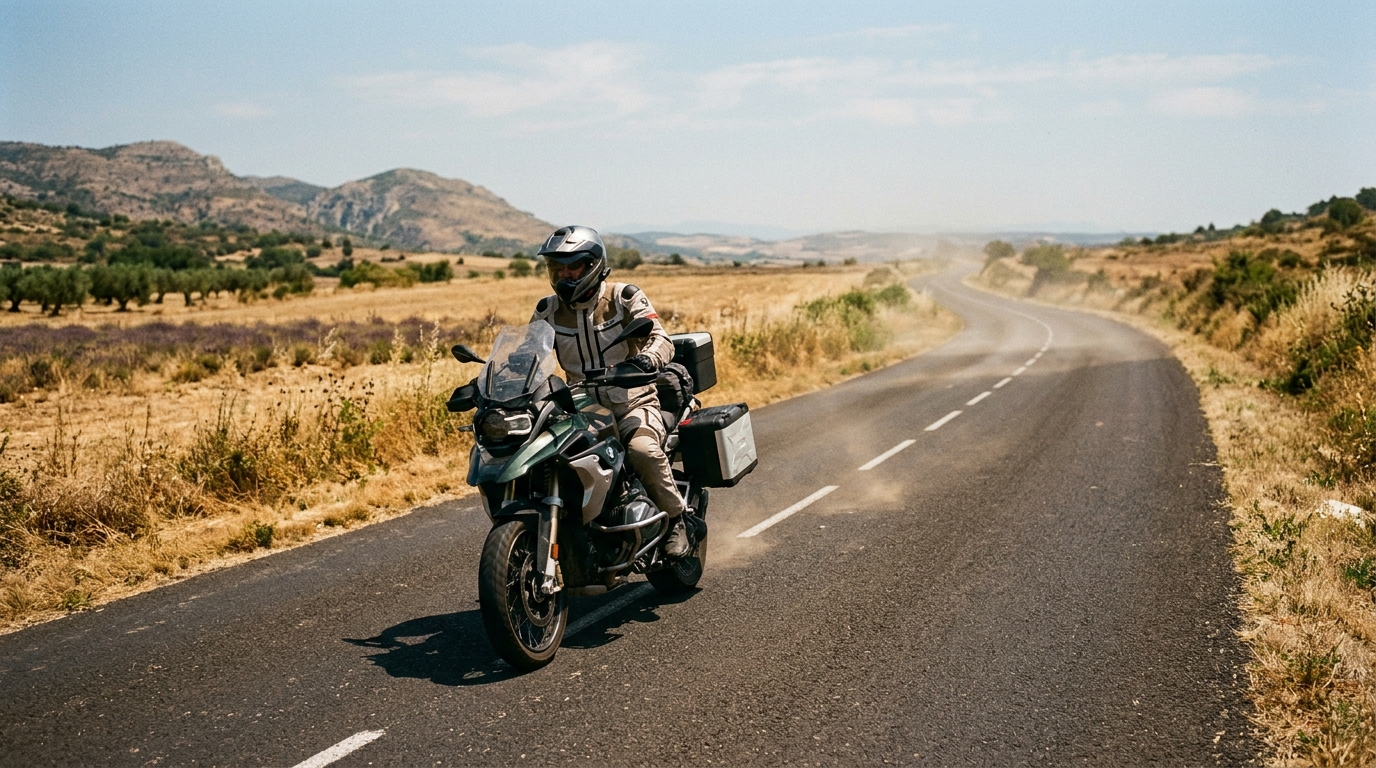
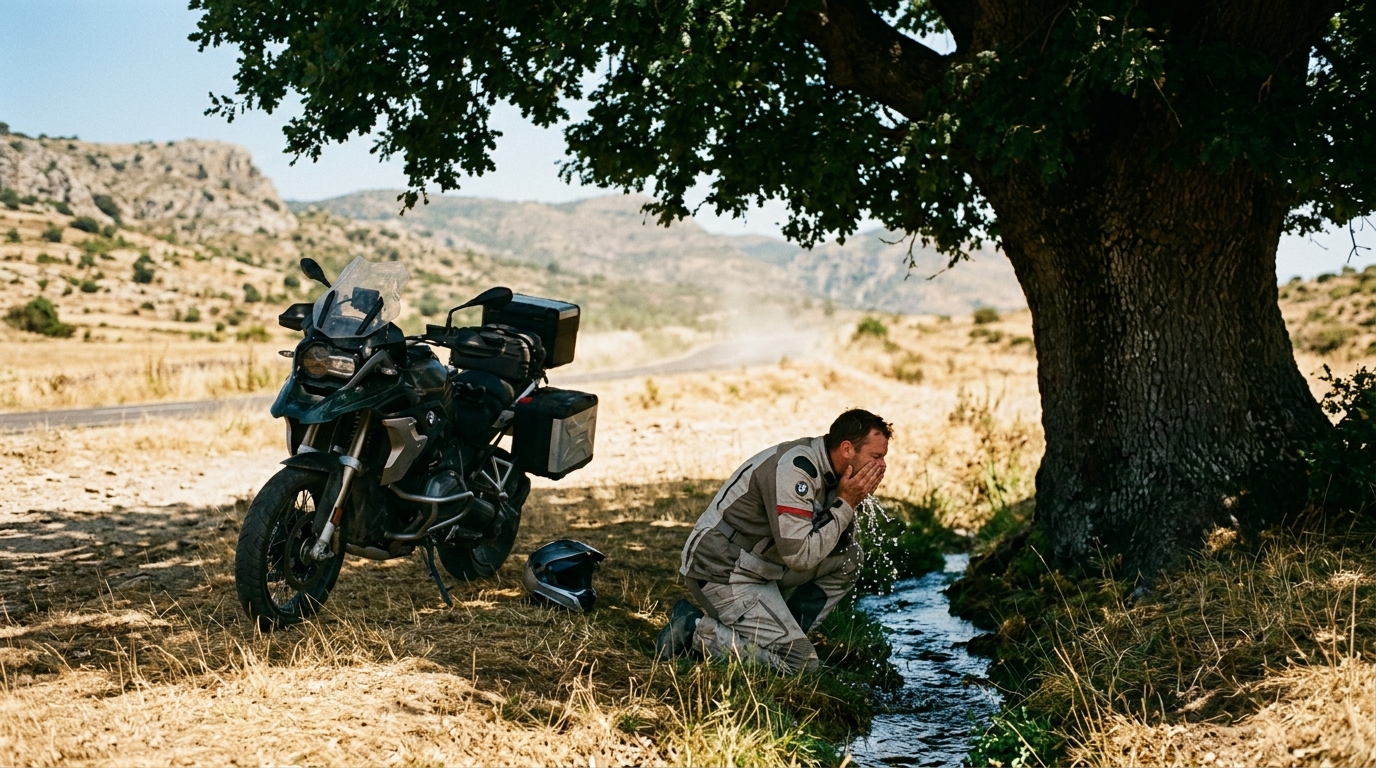
High temperatures are more than just unpleasant on a motorcycle. They sap your concentration, make you tired – and in extreme cases, heatstroke, breaking road surfaces or the wrong riding suit can become genuinely dangerous. What you really need to bear in mind in summer heat.
Why heat is so treacherous on two wheels
In a car, you turn up the air conditioning; on a motorcycle, you are sitting right in the middle of it. Full sun, hot tarmac and a dark riding suit that acts like a radiator – your body is working against the heat the entire time. The problem is that you often notice it too late. If you are dehydrated or overheated, you react more slowly, judge distances less accurately and become inattentive. Exactly the things that determine whether you crash or not on a bike.
Then there is the airflow. It feels pleasantly cool and fools you into thinking everything is fine – while at the same time the sun is roasting the back of your neck and you are losing litres of fluid through your skin without noticing. Deceptive.
Sunstroke or heatstroke – what is the difference?
The two are often lumped together, but medically they are different things. Knowing the difference helps because you need to react differently in each case.
Sunstroke
Sunstroke occurs when blazing sun beats down on your head and neck for a prolonged period and irritates the meninges. Classically when standing at the petrol station without a helmet or taking a break without shade. A typical sign is a bright red, hot head – while the rest of the body remains at a normal temperature. There may also be headaches, a stiff neck, dizziness and nausea. The nasty thing is that symptoms often do not appear until hours later, for example in the evening at the hotel.
Heatstroke
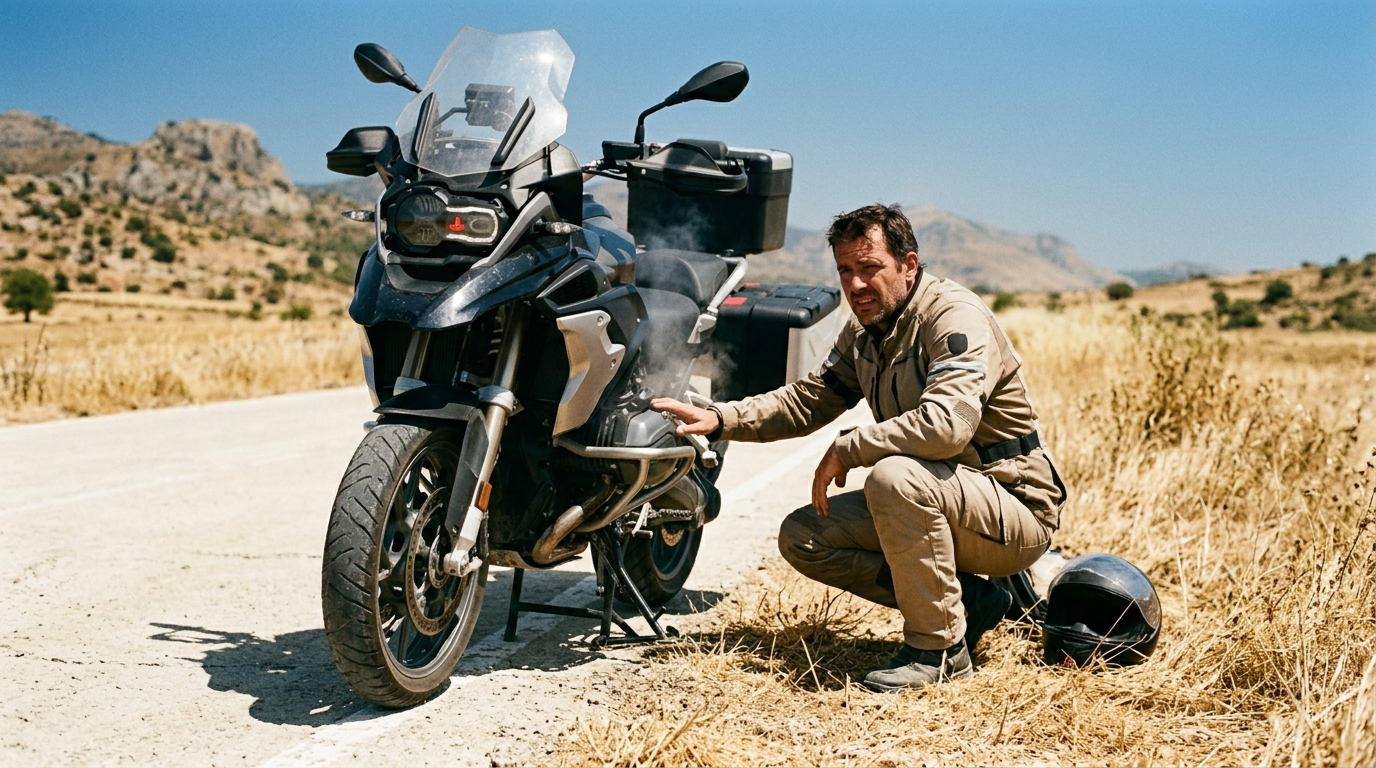
Heatstroke is the dangerous one and a genuine emergency. Here, the whole body overheats, the core temperature rises above 40 degrees and the body's own temperature regulation breaks down. Signs include hot, often dry skin, a racing heart, rapid breathing, confusion, convulsions and even unconsciousness. In the worst case, organ failure is a risk – so this is not something to take lightly, but a case for emergency services.
The preliminary stage: heat exhaustion
Heat exhaustion lies between the two. Here, the skin tends to be damp, body temperature is normal to slightly elevated, and there is also dizziness and weakness. The transition to heatstroke is gradual and unpredictable – so the rule is: better to stop once too early than once too late.
First aid: How to react correctly
If you notice warning signs in yourself or your passenger:
- Get out of the sun immediately, into the shade, and remove the helmet and restrictive clothing.
- Cool the body with cold water; place damp cloths on the neck, underarms and wrists. Change the cloths as soon as they become warm.
- Drink in small sips – but only if the person is clearly conscious.
- If heatstroke is suspected: call emergency services on 112 first, then start cooling. Not the other way round.
- Keep away from paracetamol and similar remedies. Heat-related illness is not a fever – fever-reducing medication does not help and may even cause harm.
- If someone is unconscious: place them in the recovery position, keep their airways clear and do not give them anything to drink.
Blow-ups: When the road surface bursts open
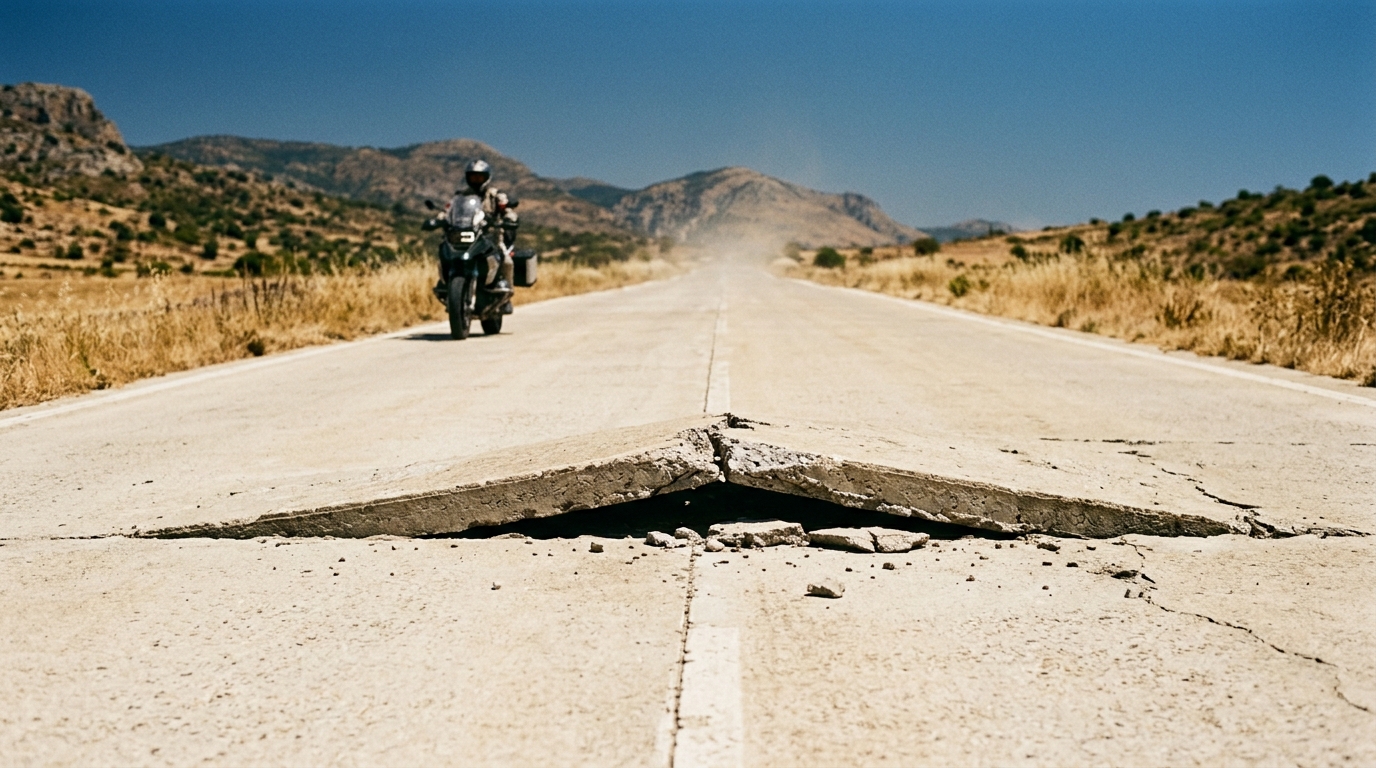
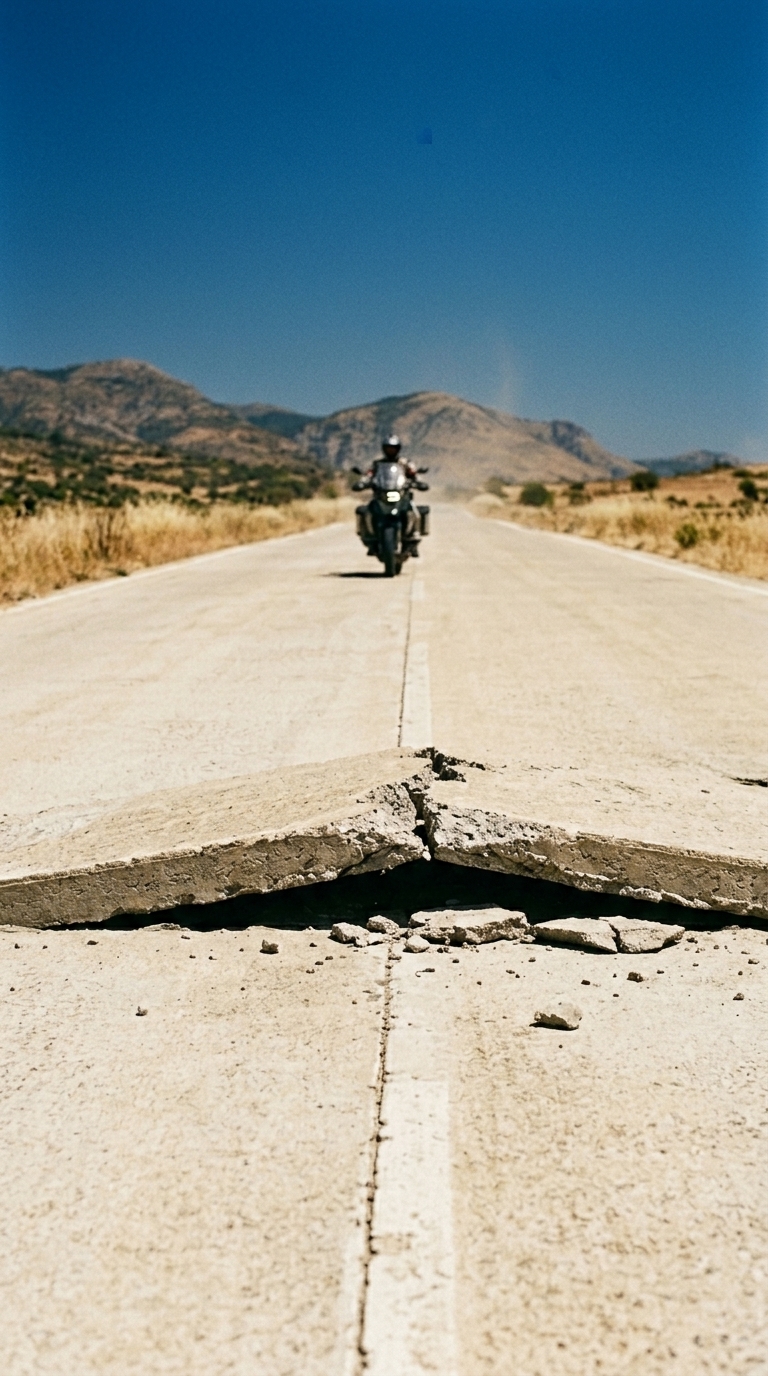
One issue that particularly affects us motorcyclists is blow-ups. At temperatures above 30 degrees and after several hot days in a row, the surface of older concrete motorways can buckle and literally burst open. Such an edge is unpleasant for a car, but it can cause a motorcycle to crash – completely unpredictably.
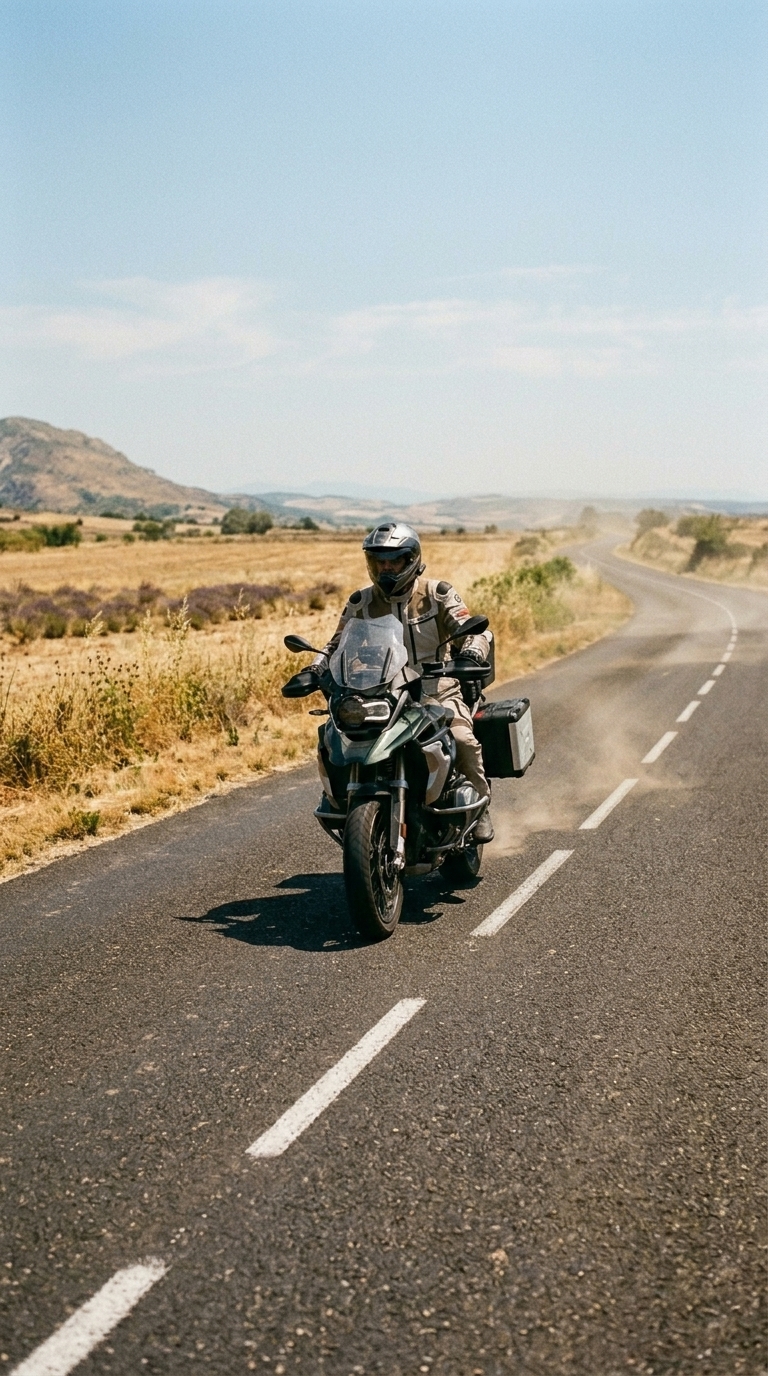
Important for context: tarmac road surfaces are not affected, only older concrete sections with insufficient surface thickness. In Germany, these are individual routes, such as sections of the A92 and A93, where special speed limits sometimes apply in summer. There is no real protection, but: ride attentively on known concrete stretches, increase your distance and take speed limits seriously. Anyone who spots a broken section without signage should report it immediately to the police or motorway maintenance authority – so that nobody behind you gets caught out.
The right clothing – and why black is not a good idea
Now for the perennial argument: clothing. Wearing full gear at 35 degrees takes willpower, which is precisely why so many people sit on their bike in a T-shirt. The only problem is: the tarmac does not care about the temperature. A crash in hot weather hurts just as much as it does in spring – only then your skin is the only thing between you and the road surface.
The answer is not “less”, but “smarter”:
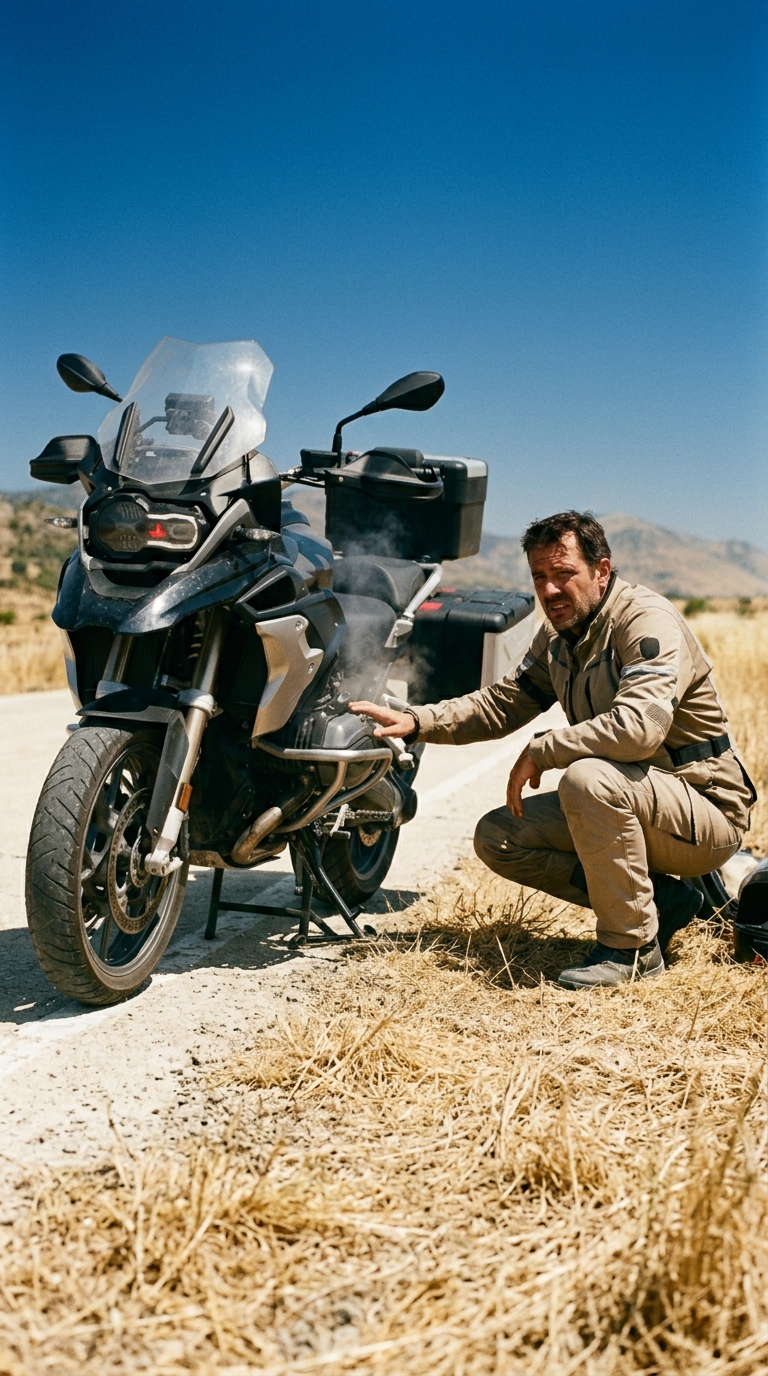
- A black riding suit looks good, but heats up noticeably more than a light-coloured one. If you have the choice, lighter colours keep you cooler in high summer.
- Mesh and ventilated textile jackets with protectors are the best compromise: airflow plus protection, and considerably more comfortable than solid leather.
- Functional base layers under your jacket may sound paradoxical, but they keep sweat away from the skin and cool through evaporation. A cotton T-shirt that soaks it all up does exactly the opposite.
- Cooling vests that you soak in water beforehand make a real difference on long stages.
- Opening your helmet at traffic lights helps – but keep the visor closed when riding, otherwise your eyes dry out and insects at speed are anything but fun.
It sounds like a lot, but in the end it is simple: protect yourself, but choose material that lets air through. “Naked is cooler” is true only until something goes wrong.
Riding without gloves? It gets expensive in France
Speaking of leaving things off: in hot weather, gloves are often the first thing to disappear into the bag. I know what I am talking about – exactly that happened to me on a long trip through France. Flat, hot countryside, kilometres of nothing but straight road, my hands boiling on the handlebars. At some point, I took off my gloves. Big mistake.
First, by evening I had bright red, burnt hands – a severe sunburn exactly where the sun had been beating down for hours. Second, and this is the part I do not even want to think about: had I crashed at that moment, I would have badly torn up my hands. Exactly the hands that you instinctively put out first in every crash.
And third, I was promptly waved over by the police. They were not pleased – because since November 2016, France has had a clear glove requirement: riders and passengers must wear CE-approved motorcycle gloves compliant with standard EN 13594, regardless of engine capacity, and this explicitly applies to foreign bikers too. I got away with a warning because, as a German, I could credibly claim not to know the rule – and the officers were genuinely nice in the end. But I would not rely on that: normally, around 68 Euro is due – per person.
Spain has followed suit since 2025 and also requires CE gloves as well as sturdy footwear, while Belgium requires full protective clothing. In other words: it is better to plan a tour south with gloves on the handlebars rather than in the top case. Learn from my mistake.
Tips for long tours in hot weather
Finally, the practical advice for a big summer trip:
- Set off early. The hours before the midday heat are the best for riding – cool, quiet, with good light.
- Drink before you are thirsty. Water or a juice spritzer at every break. Thirst is already a warning sign, not a starting signal.
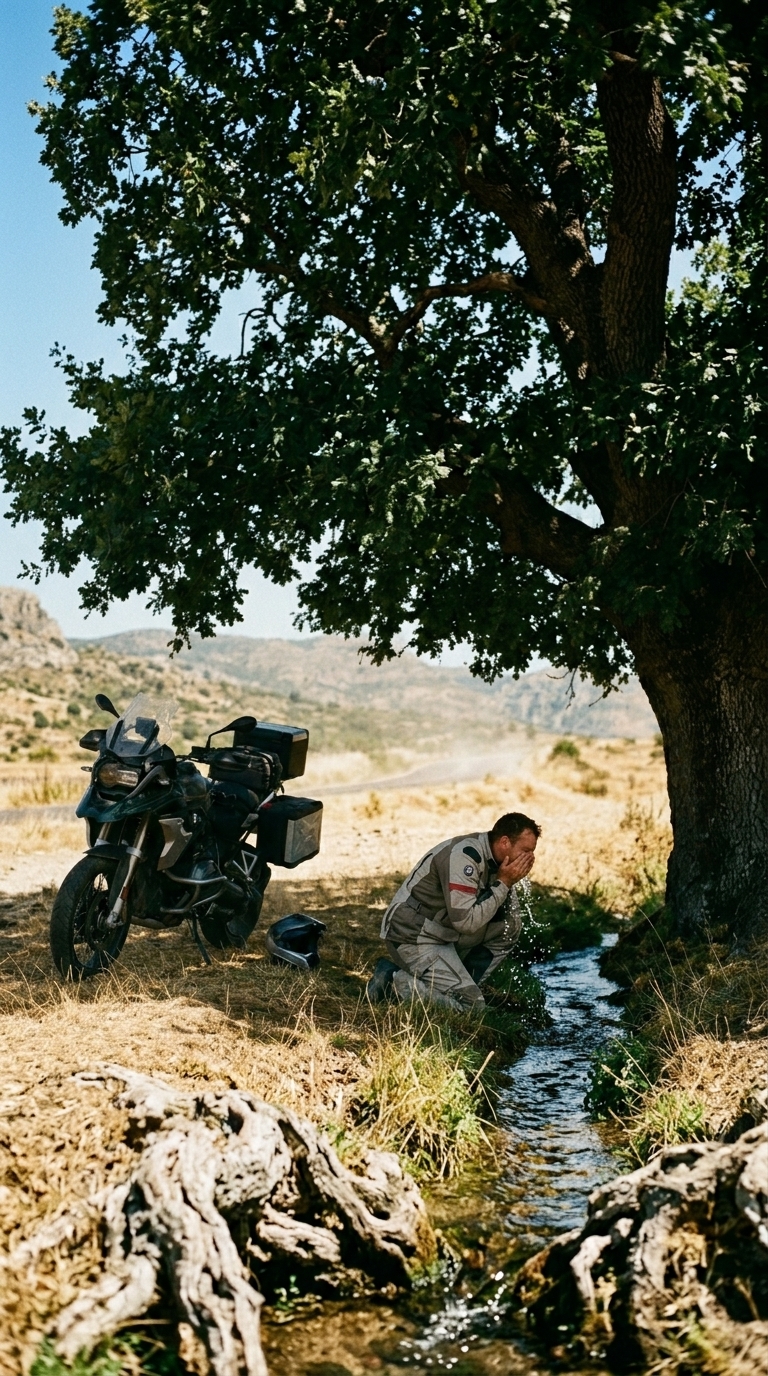
- Take breaks in the shade, not in blazing sun. Better to stop briefly more often than rarely for a long time.
- Have a siesta like in the south: take a two- or three-hour break when the heat is at its most brutal, then continue in the late afternoon.
- Do not forget electrolytes. Anyone who sweats heavily loses more than just water – a pinch of salt or an electrolyte mix helps prevent cramps.
- Keep an eye on yourself and your passenger. Lapses in concentration, irritability and headaches are not trivialities, but signs that a break is overdue.
Conclusion
My impression after many hot kilometres – and a lesson involving burnt hands in France: heat is no reason to leave the bike at home, but it demands respect. The two biggest mistakes are believing yourself invulnerable and leaving off protective clothing. Drink more than you think you need, ride during the cooler parts of the day, take sunstroke and heatstroke seriously, and wear your gloves on trips south. Then summer remains what it should be: the best time on two wheels.